



THREAD LIFT
what is thread lift
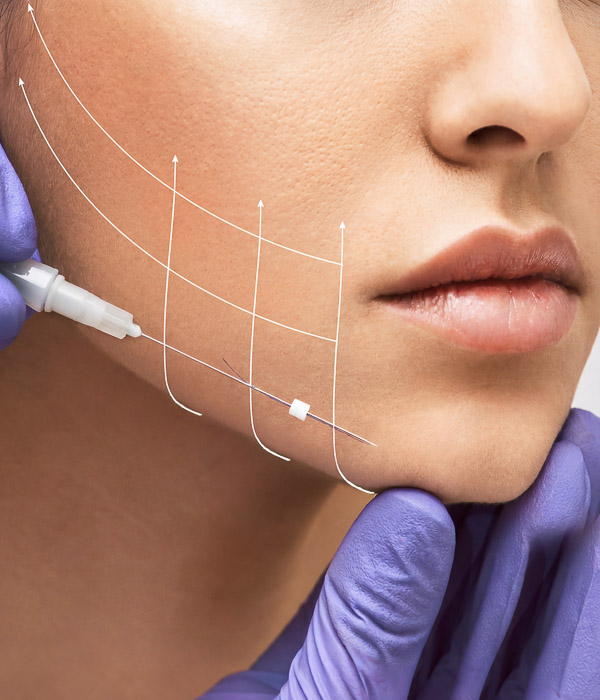
A thread lift is a minimally invasive procedure that involves placing temporary sutures (threads) under the skin to reposition and support soft tissue.
It may be considered to address mild to moderate skin laxity in areas such as the brows, cheeks, jawline, and neck. Thread lifts are sometimes used in individuals who are
beginning to notice early changes in skin firmness.
A thread lift does not replace surgical procedures such as a facelift, and the degree of change achieved is generally more subtle.
about the procedure
A thread lift is performed using fine needles or cannulas to place dissolvable threads beneath the skin.
Once positioned, the threads are adjusted to support the surrounding tissue. Over time, the threads are absorbed by the body. During this process, they may stimulate a local collagen response, which can contribute to tissue support.
The procedure is typically performed under local anaesthesia in a clinical setting.
A consultation is required prior to treatment to assess suitability, discuss goals, and review medical history. Alternative treatment options may also be discussed. A cooling off period is observed before proceeding.
Thread lifts may be performed as a standalone procedure or in combination with other non-surgical treatments, depending on the individual treatment plan.
who is suitable?
A thread lift may be considered by people who have concerns about mild to moderate skin laxity or early changes in facial support and contour. Suitability depends on a range of factors, including skin quality, degree of tissue laxity, facial anatomy, age, medical history, previous treatments or surgery, and individual goals.
A person may consider a thread lift if they:
- Have mild to moderate skin laxity affecting areas such as the cheeks, jawline, brows, or neck
- Are beginning to notice early signs of ageing or facial sagging
- Prefer a less invasive option compared to surgical procedures
- Are seeking assessment for non-surgical facial rejuvenation options
- Have realistic expectations about what the procedure may and may not achieve
- Are in generally good health and able to undergo treatment and recovery
- Understand the potential risks, limitations, and recovery involved
A thread lift may not be suitable for individuals with significant excess skin or more advanced tissue laxity, where surgical options may be more appropriate.
A thread lift is not suitable for everyone. A consultation with an appropriately qualified health practitioner is required to assess your individual circumstances, discuss alternative options, and determine whether treatment is appropriate.
RECOVERY
Recovery following a thread lift varies between individuals. In general:
- Mild swelling, bruising, tenderness, or discomfort may occur in the early recovery period
- Some patients may require time away from work, study, or normal activities, depending on the extent of treatment
- Strenuous activity and excessive facial movements are usually avoided for a period advised by your practitioner
- Sleeping positions and facial care routines may need to be temporarily modified during healing
- Swelling and subtle changes in facial contour may continue to improve over several weeks
- Follow-up appointments are important to monitor healing and treatment outcomes
Following post-procedure instructions carefully can help support recovery and reduce the risk of complications.
RISKS
As with any surgical or invasive procedure, a thread lift carries potential risks. These may include, but are not limited to:
- Infection, bleeding, or bruising
- Swelling, tenderness, or discomfort
- Changes in skin sensation
- Asymmetry or contour irregularities
- Skin dimpling, puckering, or irregularities
- Thread visibility, palpability, migration, or breakage
- Poor wound healing
- Dissatisfaction with the outcome
- Adverse reaction to local anaesthetic or treatment materials
- Need for further treatment, adjustment, or removal of threads
Your surgeon will discuss the risks, benefits, alternatives, and recovery process with you during your consultation.
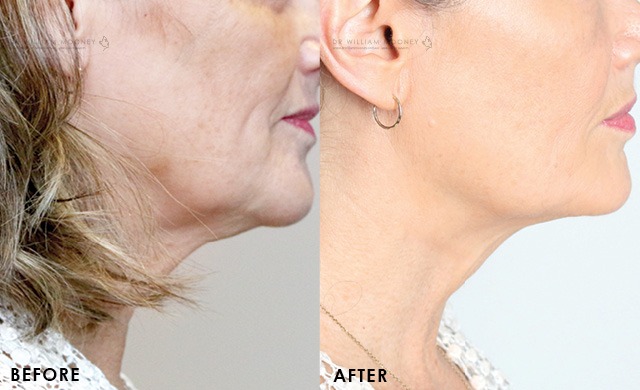
BEFORE & AFTER
IMPORTANT INFORMATION

Individual Assessment
Every patient requires a personalised consultation to determine appropriate treatment planning.
Any surgical or invasive procedure carries risks. Before proceeding, you should seek a second opinion from an appropriately qualified health practitioner.
For more detailed information about potential risks, recovery and post operative care, please visit rhinoplastysydney.com.au/disclaimer/