

Rhinoplasty
Our Philosophy on Rhinoplasty
Rhinoplasty is a surgical procedure that may be considered to address functional and/or aesthetic concerns of the nose. While it is a commonly requested operation, it is also technically complex and requires careful assessment and planning.
Depending on individual anatomy and clinical indications, rhinoplasty may involve reshaping bone and cartilage to modify nasal size, width, projection, symmetry, or contour. Both surgical and, in selected cases, minimally invasive techniques may be discussed. Different components of the nose, including the nasal bridge, tip, and nostrils, may be addressed as part of an individualised treatment plan.
Importantly, nasal appearance and nasal function are closely linked. Where appropriate, functional issues such as breathing concerns are assessed alongside aesthetic goals. For this reason, careful evaluation by an appropriately trained and experienced practitioner is essential.


The Procedure
Rhinoplasty is performed in a hospital setting under general anaesthesia and typically takes approximately two hours. The surgical approach is determined by individual anatomy and treatment goals. In some cases, an open rhinoplasty technique may be used, involving a small incision at the base of the nose to allow detailed access to the underlying bone and cartilage. This incision is designed to heal with minimal visible scarring.
During the procedure, the nasal bone and cartilage framework may be reshaped to modify contour, alignment, or proportion. The skin is then repositioned over the adjusted framework and incisions are closed. Where clinically indicated, functional concerns such as nasal airway obstruction or sinus-related issues may also be addressed during surgery.
A comprehensive consultation is required to discuss suitability, expected outcomes, and potential risks. All surgical procedures carry risks, and patients are encouraged to seek a second opinion before proceeding.
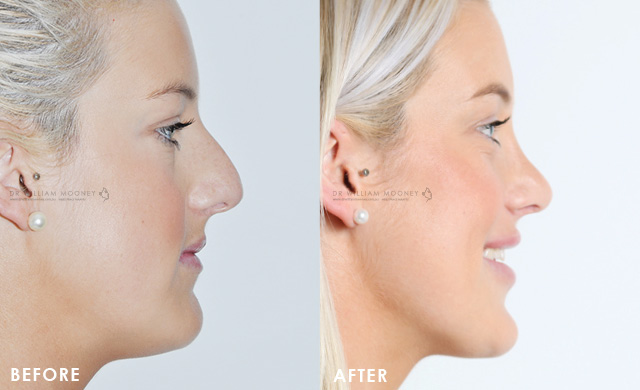
BEFORE & AFTER
Post-procedure images are typically taken between 3 to 12 months following treatment.
Individual results vary and these photographs are provided for illustrative purposes only. They do not represent or guarantee that similar outcomes can be achieved. Factors such as individual anatomy, healing response, genetics, and lifestyle may influence results.
Please refer to our Disclaimer for further information.
Recovery
Recovery
Recovery times can vary between individuals. Generally:
A nasal splint or dressing is applied for the first week
Swelling and bruising around the nose and eyes are common initially
Mild discomfort is expected and usually managed with prescribed medicationNasal congestion and reduced airflow may occur during early healing
Most patients return to non-strenuous daily activities within 10–14 days
- Swelling gradually improves over several months, with final results taking up to 12 months
- Final results taking up to 12 months
Following post-operative instructions carefully is essential for optimal healing.
Initial Healing (Week 1–2)
0%
Reduced Swelling (Weeks 3–4)
0%
Ongoing Healing (Weeks 6–8)
0%
Final Healing (Several Months)
0%
0
WEEK 1-20
WEEK 3-40
WEEK 6-80
MONTHSRisks
As with any surgical procedure, otoplasty carries potential risks. These may include, but are not limited to:
- Infection
- Bleeding or haematoma
- Scarring
- Changes in nasal sensation or smell
- Persistent nasal obstruction or breathing difficulty
- Asymmetry or dissatisfaction with cosmetic outcome
- ANeed for revision surgery
- Adverse reaction to anaesthesia
Your surgeon will discuss all relevant risks in detail during your consultation.




Important Information
Before proceeding with surgery, patients are encouraged to seek a second opinion from an appropriately qualified health practitioner if desired.
To arrange a consultation, please contact our Patient Coordinator or submit an enquiry via our online form.
For more information on risks and recovery please click here