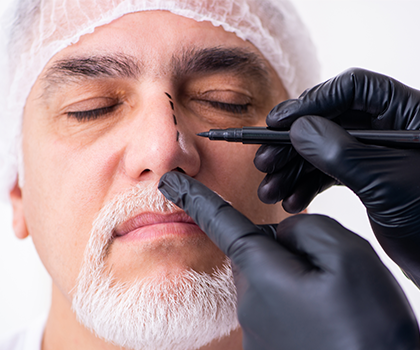
Rhinoplasty is a surgical procedure designed to change the shape or structure of the nose. Some people may consider it for medical reasons, such as improving breathing, while others may seek it for personal aesthetic preferences. It is important to understand that every procedure carries potential risks and that outcomes can vary between individuals.
What Rhinoplasty Involves
Rhinoplasty is performed by a qualified surgeon in a clinical or hospital setting. The procedure may involve modifying bone, cartilage, or tissue. Each surgical plan is personalised based on the patient’s anatomy and clinical needs.
“You only have to do a few things right in your life so long as you don’t do too many things wrong”
TONY LINDLEY
Consultation and suitability
A consultation with a qualified surgeon is required before any procedure.
Suitability is assessed based on medical history, current health, and treatment goals.
The surgeon will explain possible risks and the expected process.
Individual outcomes cannot be guaranteed.
Recovery Considerations
Recovery timelines differ between individuals.
Following the surgeon’s instructions regarding rest, care, and follow up is essential.
Swelling and discomfort are common and may take time to resolve.
Risks and precautions
All surgical procedures carry risks, which may include:
Infection
Bleeding
Changes in skin sensation
Scarring or irregularities
It is important that patients understand these risks and discuss any concerns during consultation.
Rhinoplasty is a personal decision. Professional guidance ensures that the procedure is appropriate and that patients understand potential risks and the recovery process.
ENT surgery refers to procedures involving the ear, nose, or throat. These procedures may be recommended to address a variety of medical concerns. Understanding the process, risks, and recovery is important for anyone considering surgery.
Types of ENT Surgery
Examples of ENT surgery include:
Procedures to improve hearing
Sinus surgery
Nasal correction for functional purposes
Procedures to address throat conditions
Consultation and Suitability
A consultation with a qualified ENT surgeon is required to assess suitability.
Medical history, current health, and individual needs are reviewed.
The surgeon explains potential risks, the surgical process, and recovery expectations.
Individual outcomes cannot be predicted with certainty.
Prearation and Recovery
Following pre operative instructions helps manage risks and supports recovery.
Post operative care is essential and may include rest, medication, and follow up appointments.
Recovery experiences vary between individuals.
Risks and Considerations
ENT surgery carries potential risks, which may include:
Infection or bleeding
Changes in sensation or function
Scarring or irregular healing
Anaesthesia related risks
Patients should discuss these risks during consultation and ensure they understand the procedure fully.
Conclusion
ENT surgery is an important decision that requires professional assessment. A qualified surgeon will provide guidance on suitability, risks, and recovery to support informed decision making.